
Keynote Speaker
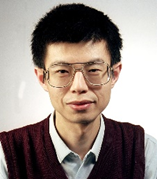
Qingsheng Zeng
Professor, Université du Québec an Outaouais (UQO), CanadaSpeech Title: Research and Development of Electromagnetic Skin and Its Applications in 5G/6G Communications and Other Fields
Abstract: Amidst the deep integration of information technology and the physical world, a novel intelligent interface that transcends the functional boundaries of traditional electronic skin—electromagnetic skin—is emerging. Unlike electronic skin, which primarily senses physical signals such as pressure and temperature, the core mission of electromagnetic skin lies in actively perceiving, dynamically regulating, and intelligently utilizing electromagnetic waves. Rather than passively responding to the environment, it serves as an active electromagnetic functional interface, enabling real-time control over electromagnetic field distribution, polarization, phase, amplitude, and even spectral characteristics through sophisticated material design and structural engineering. This brings revolutionary possibilities to numerous fields such as communications, perception, stealth, and energy, making it an indispensable "electromagnetic intelligence layer" for building the next generation of intelligent systems.
The rise of electromagnetic skin deeply reflects the contradiction between the urgent demand for electromagnetic functionality and the existing technological limitations in the context of modern technological development. In fields such as 5G/6G communication, Internet of Things, autonomous driving, intelligent perception, national defense and security, unprecedented high demands are placed on the miniaturization, integration, intelligence, and reconfigurability of electromagnetic performance of devices. Traditional electromagnetic devices, such as antennas, filters, and absorbing materials, are often bulky, functionally fixed, and bandwidth-limited, making them difficult to adapt to complex and changing application scenarios and the development trend of flexible wearable devices in the future. At the same time, radar stealth and low observability technologies pose severe challenges to the ability of materials to dynamically regulate electromagnetic responses within a wide frequency band. Furthermore, emerging fields such as biomedical electromagnetic imaging and therapy also require more bio-compatible and intelligent electromagnetic interfaces. These demands have collectively given birth to the concept of electromagnetic skin, which aims to integrate complex electromagnetic functions into ultra-thin, flexible, extensible, and even reconfigurable thin films or epidermal structures, enabling seamless intelligent interaction with the physical world (including the human body, equipment, and environment).
Biography: Qingsheng Zeng received his Ph.D. from University of Ottawa, Canada, and is currently a professor and PhD advisor of Université du Québec an Outaouais (UQO), an adjunct professor and PhD advisor of University of Ottawa, Carleton University, and Institut National de la Recherche Scientifique -- Centre Energie, Matériaux et Télécommunications (INRS-EMT). He has been a research engineer and a senior research engineer at Communications Research Centre Canada (CRC), Government of Canada. Dr. Zeng has undertaken research and teaching in several fields, including analysis and design of aircraft antennas, electromagnetic compatibility and interference (EMC/EMI), ultrawideband technology, radio wave propagation, computational electromagnetics. He has been the Chair of AP (Antennas and Propagation) / MTT (Microwave Theory and Techniques) Joint Chapter and Secretary of EMC (Electromagnetic Compatibility) Chapter of IEEE Ottawa, a Member of IEEE Canada Industry Relations Committee, and a senior member of IEEE. Dr. Zeng has been a member of the Strategic Projects Grant (SPG) Selection Panel (Information and Communications Technologies B) for the Natural Sciences and Engineering Research Council of Canada (NSERC), a member of Site Visit Committee of NSERC Industrial Research Chair (IRC), and a reviewer of NSERC Industrial R&D Fellowships.
He has published more than 200 SCI and EI indexed papers and technical reports, authored one book and co-authored two book chapters. His work on the project “Aggregate Interference Analysis and Suitability of Some Propagation Models to Ultra-wideband Emissions in Outdoor Environments” has formed one part of Consultation Paper on the Introduction of Wireless Systems Using Ultra Wideband Technology, Spectrum Management and Telecommunications Policy, Industry Canada, and has been taken as a significant contribution to International Telecommunication Union (ITU). Dr. Zeng has been serving as an editorial board member and a reviewer for a number of technical books and scientific journals, as a conference co-chair, a session chair and organizer, a technical program committee co-chair and member and a reviewer, a short course/workshop/tutorial presenter and a keynote speaker for many international and national symposia. He has won several technical and technical service awards, was ranked as one of the researchers at Communications Research Centre Canada with the strongest impacts in 2011, selected as a distinguished expert under the Plan of Hundreds of Talents of Shanxi Province in China during 2015, an oversea prestigious advisor in Guangdong Province twice in 2017 and in 2019, a Huashan Mountain Scholar Chair Professor of Xidian University in 2020, and a distinguished expert for HOME Program of China Association for Science and Technology in January 2023, and was elected as a member of the Council of the Academicians and Experts Association of Jilin Province in December 2023.